
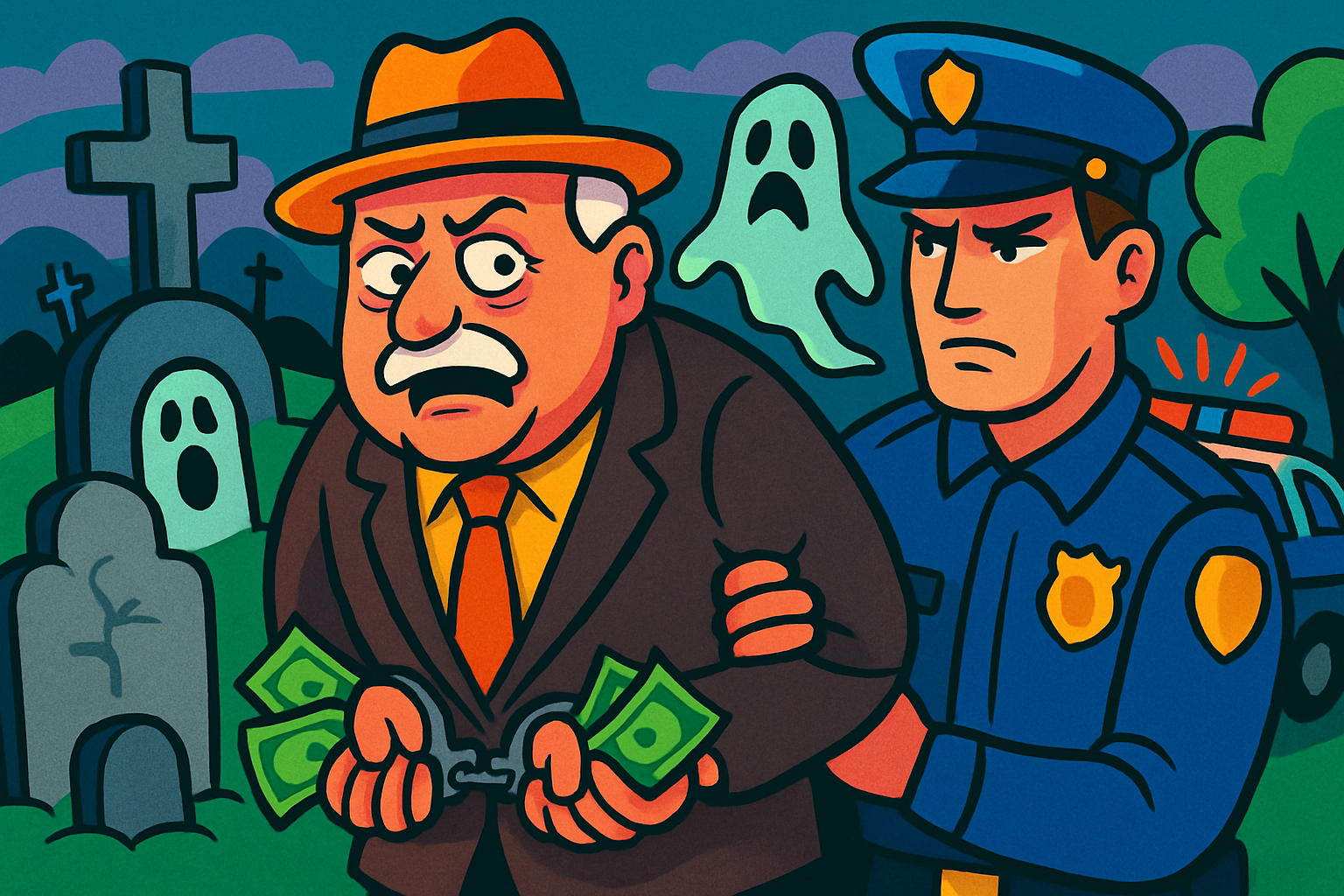
Grave Deceit: Cemetery Owner’s Shocking Fraud on Grieving Families
In the annals of crime, there’s a special corner reserved for those who manage to exploit the seemingly incorruptible sanctity of death. Enter Jeffrey Phares, a cemetery owner in West Virginia who took his penchant for financial trickery to new depths (literally) by defrauding grieving families out of over $600,000. Because, apparently, scamming the living just wasn’t challenging enough.
According to the U.S. Attorney’s Office, Mr. Phares of Fayetteville, West Virginia, will finally face the music this November. Having pleaded guilty to wire fraud, he admitted to accepting money for grave markers he never intended to deliver. Instead, he pocketed the cash, leaving mourners not only with their loss but with a tangible reminder of it—a grave without a marker.
Death and Debt: A Business Model?
Let’s pause and marvel at the sheer audacity of it all. Phares operated four cemeteries—not one, but four! Each site a potential goldmine of grief where he could milk the mourning for all they were worth. It’s almost like he was building a business model based on befuddlement and bereavement. Buy one grave marker, get infinite frustration free!
From Greenlawn Memorial Park in New Martinsville to Forest Lawn Memorial Gardens in Jane Lew, Phares managed to lure 225 victims into his elaborate scheme. It seems he was playing the long game of theft—who suspects the man overseeing a resting place to be on the take? This isn’t the plot twist we wanted from our local grave-digger.
Breaking the Tombstone Taboo
Let’s spotlight one glaring detail: Phares’s promise to pay restitution. According to his plea agreement, he’ll be reimbursing the $600,000 he scammed. But let’s be real. This isn’t just handing over spare change from the couch cushions. The real question is whether this restitution will come from Phares’s personal coffers—or the always reliable prison bookkeeping system. Either way, you might want to hold off on expecting an express delivery of that loved one’s grave marker.
As much as this restitution shows a glimmer of justice, the cynic in me wonders how many ham sandwiches and instant noodles Phares will be vending behind bars to make up for such a hefty debt. Ever heard of a lemonade stand? Maybe we’re about to see the rise of the “prison grave marker enterprise.” After all, necessity is the mother of invention, and necessity will soon be demanding payment in cold, hard cash.
The Sentencing Dilemma
Mr. Phares now faces up to 20 years in prison. Federal guidelines will ultimately decide whether he’s making license plates or relaxing in a less cushy white-collar crime resort for the foreseeable future. That said, if there’s any justice in the world, his sentencing will match the callousness he showed towards those he swindled. Of course, justice being blind, she might just get hoodwinked into an unmarked grave deal.
While we eagerly await the final decree from Judge John Preston Bailey, let’s take a moment to consider the wider implications of this sordid tale. Fraudsters come in all shapes and sizes, but there’s something uniquely unsettling about someone who preys on those in mourning. It’s a reminder that vigilance is necessary, even in places where trust should be implicit.
Rest in Peace, Common Sense
In conclusion, while the exploits of Jeffrey Phares might read like a macabre comedy, the story underscores a chilling reality about vulnerability in emotionally charged moments. So, dear readers, if you ever find yourself looking at grave marker options, keep one eye on the contract and the other on your wallet. Because if this case has taught us anything, it’s that death might be certain—but the delivery of a tombstone is apparently not.
Now excuse me while I go check my life insurance policy—it seems there’s a new business trend to worry about.